Why animals matter to human health and nutrition
Human, livestock and environmental health are inextricably linked, Sixty-one per cent of all diseases are ‘zoonotic’ –that is, transmissible between animals and humans.
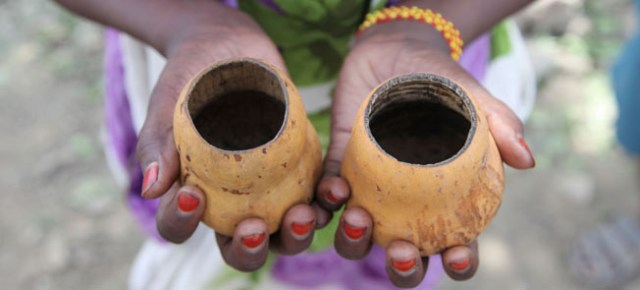
Human, livestock and environmental health are inextricably linked, Sixty-one per cent of all diseases are ‘zoonotic’ –that is, transmissible between animals and humans.
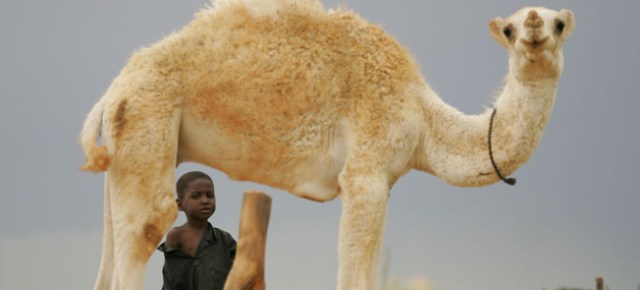
Expert opinion agrees that the best way to tap into the potential of the drylands is to build on the foundation of their livestock economies rather than ignoring them or seeking to replace them.

Making smallholder production more competitive is a powerful tool to reduce poverty, raise nutrition levels and improve the livelihoods of rural people in many developing countries
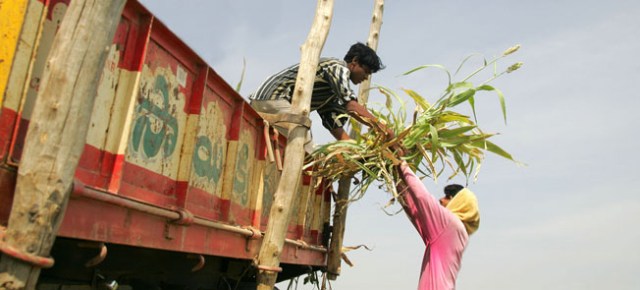
Mixed crop-and-livestock farms will, more than the traditional breadbaskets and rice bowls of the past, feed the developing world over the next few decades
A CGIAR-led half-day training session on ‘key messaging and pitching for impact and influencing decision makers to take up research’ was held on the last day of a ResUp Meet Up Symposium and Training Exchange held 9-12 February 2015 in Nairobi, to explore emerging issues and advance skills and practice in research uptake. Continue reading
These are highlights and lessons learnt from an event of the Forum for Agricultural Research in Africa (FARA) known as ‘Celebrating FARA’, which was held 26-28 November 2014 in Johannesburg, South Africa. Continue reading
Like our sister CGIAR centres, ILRI’s research publishing is now very diverse spanning images, video, posters, podcasts, blogposts, tweets, extension leaflets and much more. What are the most-read or viewed in the past year? We are lucky that all the channels we use provide metrics and stats of various sorts. Continue reading
The originally CCAFS-funded initiative on climate change communication and social learning (CCSL) has to start scaling up big and wide in 2015, or cease to exist in 2016. That is one of the many important conclusions of the recent CCSL team meeting (15-17 December 2014 in Kenya)… Continue reading
Have we misunderstood technology adoption all these years? The annual monitoring and evaluation meeting of the Africa RISING program featured a presentation by David Spielman (IFPRI) that addressed this very issue. It connected strongly with CCAFS work on social learning and showed some directions for social learning to remain relevant for many and for the long haul… Continue reading
ILRI’s Capacity Development (CapDev) Unit working in collaboration with People & Organizational Development (P&OD) Unit and the Training Centre for Communication (TCC), recently delivered a highly interactive and practical workshop designed to give ILRI graduate fellows, post-doctoral fellows and early career researchers, an opportunity to understand the process of scientific writing and publishing Continue reading
Introducing the work of ILRI’s engagement and collaboration team in the communications and KM group. Continue reading
This week is ‘Open Access Week’ with lots of activities happening worldwide. A good week to celebrate the freedom of information to circulate. This week is also ‘International Facilitation Week’; also a good opportunity to wonder how open facilitation helps knowledge circulate just as openly… Continue reading
The intention of the organizers of the ‘African Dairy Seminar’ (21-24 September 2014) was, from the start, to organize a ‘different kind of event’, realizing that a lot of workshops are run in a rather standard kind of way. The difference this time? Good content and questions, a good mix of participants, and useful (graphic) facilitation – with all that this encompasses… Continue reading
This week, Peter Ballantyne was asked by ICRISAT to share some experiences on ‘Open access repositories: Sharing research to the global community’ at a workshop as part of a ‘Capacity Development Program on Appropriate Technologies and Innovative Approaches for Agriculture Knowledge Sharing.’ Continue reading
 Maarifa - Communications and Knowledge Management