Why animals matter to human health and nutrition
Human, livestock and environmental health are inextricably linked, Sixty-one per cent of all diseases are ‘zoonotic’ –that is, transmissible between animals and humans.
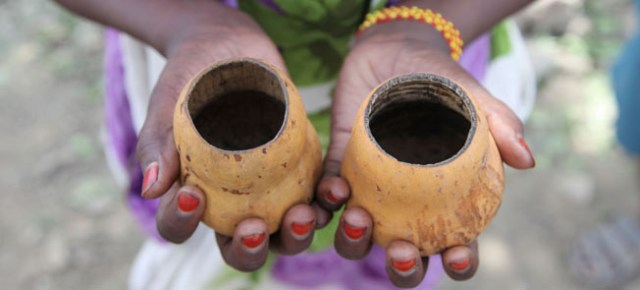
Human, livestock and environmental health are inextricably linked, Sixty-one per cent of all diseases are ‘zoonotic’ –that is, transmissible between animals and humans.
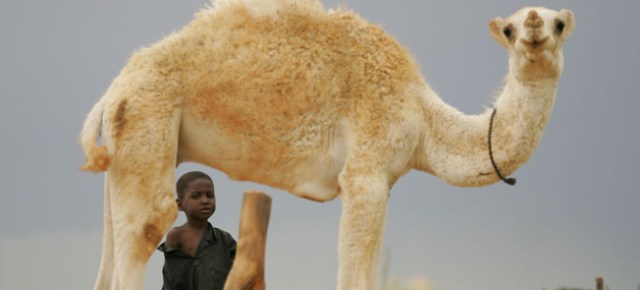
Expert opinion agrees that the best way to tap into the potential of the drylands is to build on the foundation of their livestock economies rather than ignoring them or seeking to replace them.

Making smallholder production more competitive is a powerful tool to reduce poverty, raise nutrition levels and improve the livelihoods of rural people in many developing countries
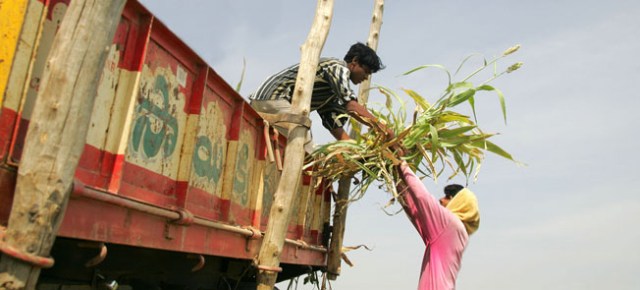
Mixed crop-and-livestock farms will, more than the traditional breadbaskets and rice bowls of the past, feed the developing world over the next few decades
Inter-connecting agricultural research information systems and tools is one activity of the ‘Coherence in Information for Agricultural Research for Development’ (CIARD) movement. It has set up an online ‘RING‘ as a registry of information services provided by various organizations working in this area. The RING draws on information submitted by organizations like the International Livestock … Continue reading
Eight years ago the first issue of the Knowledge Management for Development Journal (KM4D Journal) was published. It emerged from November 2004 discussions in a small attic room at IICD in The Hague; the initial discussants were motivated by, among other things, the desire to create and publish an open journal to report and recognize … Continue reading
Conferences, workshops and events of all sorts are at the heart of ILRI work. ILRI staff travel to many places to present some of the work the organisation does. A long piece of meticulous research work gets synthesised in one presentation that can really glorify or ruin the awareness, attention, dissemination and ultimately the uptake of … Continue reading
The Institute for Development Studies (IDS) hosted a ‘Climate Change Knowledge Exchange‘ on 5-6 March 2013. The exchange which was designed with the intention of being ‘an antidote to death by Powerpoint‘, was co-created on the Climate Change and Social Learning (CCSL) sandbox – which was set up by ILRI and the CGIAR Research Program on … Continue reading
Between November 2012 and February 2013, the Nile Basin Development Challenge (NBDC) ran two major events to help steer its efforts in this last year of the Challenge. On 15 and 16 November, a largely internal planning workshop gathered 25 participants representing the four NBDC projects. On 20-21 February 2013, about 70 people – project staff, partners and other related parties … Continue reading
In late 2011, the CGIAR Research Program on Climate Change, Agriculture and Food Security (CCAFS) issued a call for proposals to help develop a CCAFS ‘strategy on communication and social learning’. This was the start of a collaboration between CCAFS and ILRI’s Knowledge Management and Information Services (KMIS) team on Climate Change and Social Learning … Continue reading
Since 2011, the International Livestock Research Institute (ILRI) has been organizing various training courses on social media, communication and knowledge management, with the brand name ‘Komms Klinics‘. Looking back In 2011, the various sessions were organized for staff to get acquainted with different communication and social media tools they could use in their research work, such as Yammer, iGoogle, wikis, blogging among … Continue reading
Last week I attended an Open Knowledge for Agricultural Development Convening organized by Michigan State University (MSU), OER Africa, and The Regional Universities Forum for Capacity Building in Agriculture (RUFORUM). The aim was to explore ways to “accelerate agricultural development through open knowledge practices”; we discussed innovations in open learning from the AgShare project, as … Continue reading
Carbon sequestration, GHG emissions, NDVI, GIS…..these are some of the words that routinely fly in a conversation around my workspace. You see, I sit with subject matter specialists and that subject is the environment. The words are perfect for scholarly publications but my raison d’etre is to put them in everyday language so that farmers, staff … Continue reading
 Maarifa - Communications and Knowledge Management