Why animals matter to human health and nutrition
Human, livestock and environmental health are inextricably linked, Sixty-one per cent of all diseases are ‘zoonotic’ –that is, transmissible between animals and humans.
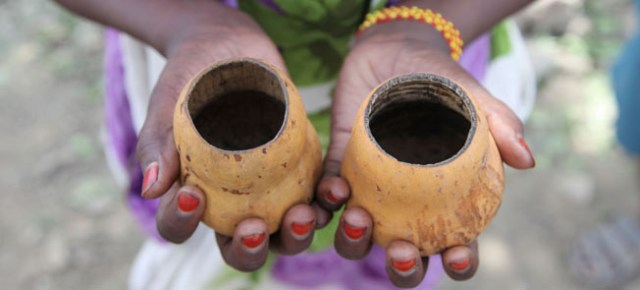
Human, livestock and environmental health are inextricably linked, Sixty-one per cent of all diseases are ‘zoonotic’ –that is, transmissible between animals and humans.
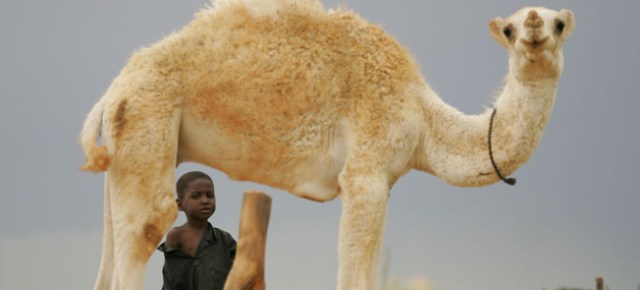
Expert opinion agrees that the best way to tap into the potential of the drylands is to build on the foundation of their livestock economies rather than ignoring them or seeking to replace them.

Making smallholder production more competitive is a powerful tool to reduce poverty, raise nutrition levels and improve the livelihoods of rural people in many developing countries
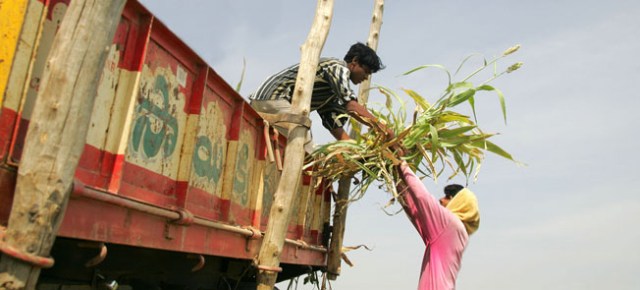
Mixed crop-and-livestock farms will, more than the traditional breadbaskets and rice bowls of the past, feed the developing world over the next few decades
Social learning helps smart organizations become smarter, and their activities to end up in smarter results. This is what a group of people working on climate change communication and social learning (CCSL) posited in June 2013 at a plan-and-writeshop. Hypothesis A: Social learning improves institutional processes and performance/effectiveness in the context of climate change. Hypothesis B: Social … Continue reading
In many CGIAR programs and activities, communication and knowledge management are invited too little and too late. This means that the results of their science may fall into oblivion. Much can be achieved by bringing communication and knowledge management right into the heart of CGIAR programs – to support engagement with partners, research uptake and … Continue reading
Since late 2011, ILRI has been working closely with the CGIAR Research Program on Climate Change Agriculture and Food Security (CCAFS) and a host of other organizations and individuals on ‘climate change, communication and social learning’ (CCSL). What started off with a meeting of minds in May 2012 has turned into a series of events, … Continue reading
ILRI people were active at the recent ict4ag conference in Kigali. Ewen Le Borgne was part of the overall facilitation team; on the plug and play day, Absolomon Kihara talked about the open data kit and on days two and three, ILRI organized session on livestock and ICTs and on social ICTs … Organized by Peter … Continue reading
Among many platforms and apps developed, my attention caught by a platform called Mkulima (a young farmer helping a young farmer) which is a social media platform to engage young farmers. Continue reading
Data collecting is a vital part of research for development work, as the results inform good decision making. Paper based system have been used to collect data in the field and for monitoring and evaluation of projects in rural areas. However, this approach is time consuming, labour intensive, error prone that may affect productivity and … Continue reading
This year’s most important event in the world of agricultural information and knowledge took place from 4 to 8 November in Kigali, Rwanda. ict4ag brought together over 400 participants eager to share ideas, questions, and applications supporting the use of information and communication technologies (ICTs) for agricultural development. The event was led by the Technical Centre … Continue reading
From 28 October to 1 November 2013, International Livestock Research Institute knowledge management team in Addis Ababa held an informal first Ethiopia DSpace Interest Group Meeting and a DSpace Technical Training for staff and other DSpace users. On the first day, about 25 people came to ILRI from various organizations in Ethiopia and abroad to meet, … Continue reading
From 17 to 20 September 2013, the Knowledge Management and Information Services (KMIS) team at the International Livestock Research Institute (ILRI) ran several knowledge sharing tools update and refresher sessions for staff in Nairobi. The main objectives of the sessions were to: Inform new staff on ILRI knowledge management and communications tools and approaches and … Continue reading
ILRI events are often designed to explore alternative methods of engagement that maximize sharing and learning. The recent AgriFood Chain Toolkit Conference – Livestock and Fish Value Chains in East Africa was one of these events. The conference was sponsored by two CGIAR Research Programs (or CRPs) – ‘Livestock and fish’, and ‘Policies, Institutions and Markets’. Its purpose was … Continue reading
 Maarifa - Communications and Knowledge Management