Why animals matter to human health and nutrition
Human, livestock and environmental health are inextricably linked, Sixty-one per cent of all diseases are ‘zoonotic’ –that is, transmissible between animals and humans.
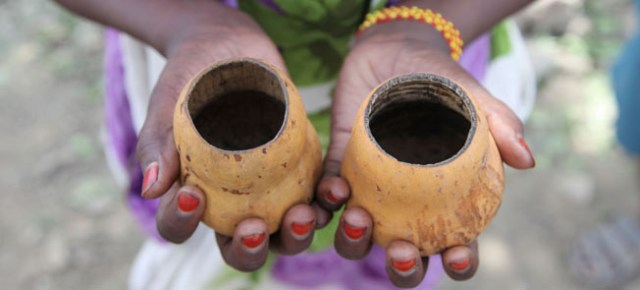
Human, livestock and environmental health are inextricably linked, Sixty-one per cent of all diseases are ‘zoonotic’ –that is, transmissible between animals and humans.
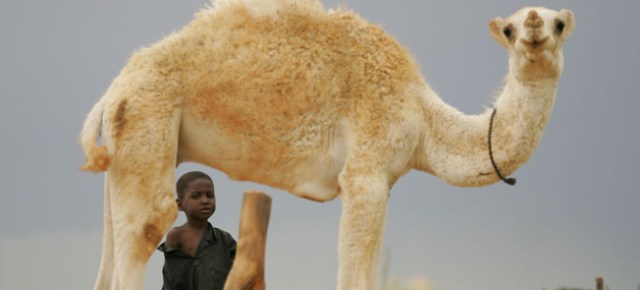
Expert opinion agrees that the best way to tap into the potential of the drylands is to build on the foundation of their livestock economies rather than ignoring them or seeking to replace them.

Making smallholder production more competitive is a powerful tool to reduce poverty, raise nutrition levels and improve the livelihoods of rural people in many developing countries
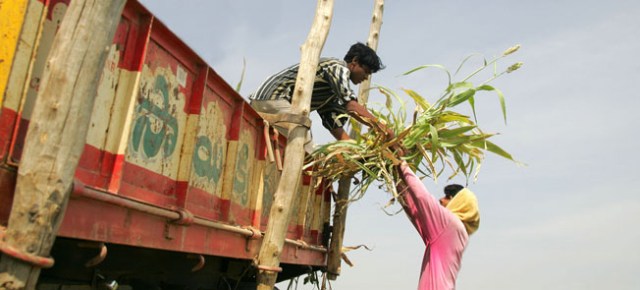
Mixed crop-and-livestock farms will, more than the traditional breadbaskets and rice bowls of the past, feed the developing world over the next few decades
On 17 October 2011 the first conference on Climate Change and Development for Africa (CCDA-1) kicked off at the UN Conference Center with the theme “Development First: Addressing Climate Change in Africa. It was organized by the United Nations Economic Commission for Africa (UNECA’s) African Climate Policy Centre (ACPC), a joint initiative of the African … Continue reading
In October 2010, ILRI Addis Ababa was the venue for a ‘share fair’ on Africa’s agricultural and rural knowledge. See the wiki about the event here In September 2011, the second Rome share fair will be hosted by IFAD (more info); so we decided to ask people who attended the Addis share fair what they … Continue reading
In line with ILRI’s strategy on publishing, we aim to make as many of our ILRI research products as possible open for our partners and others to access. Our dspace repository (Mahider) contains a full index (we hope) to recent outputs as well as the full ‘text’s of reports, documents and the like … See … Continue reading
A five-day web 2.0 training was conducted from May 23-27, 2011 in Addis Ababa, Ethiopia. The training was organized by the International Livestock Research Institute (ILRI) and the Technical Centre for Agricultural and Rural Cooperation (CTA). Participants came from Government offices, Universities, the United Nations, Non-Governmental and International Organizations with various areas of specialization. The … Continue reading
This week, communication people from across the CGIAR Challenge Program on Water and Food (CPWF) meet in South Africa to compare and agree ways to improve communication and collaboration practices within the CPWF and among its partners. ILRI’s Peter Ballantyne is attending for the Nile Basin Development Challenge (NBDC) – one of the CPWF-supported Basin … Continue reading
From 12-14 April 2011, ILRI’s KMIS team ran an introductory social media course for five people from the East Africa Dairy Development Project (EADD) and the African Agricultural Technology Foundation (AATF). The training covered the following modules: Collaboration and document sharing Blogging Managing and sharing photos on the web: Sharing PowerPoint presentation on the web: … Continue reading
Some of us find it difficult to keep track of all the various information, knowledge and news produced by ILRI and the CGIAR ….. This post is a quick intro to a service called ‘paper.li’ This is a clever tool that looks at Twitter according to some profiles we set up, and produces a ‘daily … Continue reading
The Adapting Livestock Systems to Climate Change Collaborative Research Support Program has created a web-link to information from more than 200 streams of news items posted on the websites of international and US organizations. The aggregated news is filtered for information on issues relevant to livestock, climate change, nutrition, and gender. See the feed at: … Continue reading
In February 2011, ILRI will carry out an external review of its communication activities. The terms of reference are: To review and take stock of ILRI’s external communication activities (web, publications, media, press and film etc). To comment on the relevance of ILRI’s communications strategy To review the efficiency and effectiveness of the current structure … Continue reading
In the past eighteen months, we have been working with a growing set of communication and knowledge sharing tools at ILRI. To help staff plug in to the different knowledge flows and resources, we have identified a list of the most important tools we use – and the ways that staff can use them: ILRI … Continue reading
 Maarifa - Communications and Knowledge Management