Why animals matter to human health and nutrition
Human, livestock and environmental health are inextricably linked, Sixty-one per cent of all diseases are ‘zoonotic’ –that is, transmissible between animals and humans.
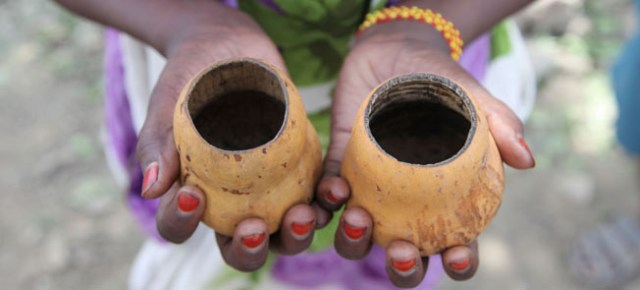
Human, livestock and environmental health are inextricably linked, Sixty-one per cent of all diseases are ‘zoonotic’ –that is, transmissible between animals and humans.
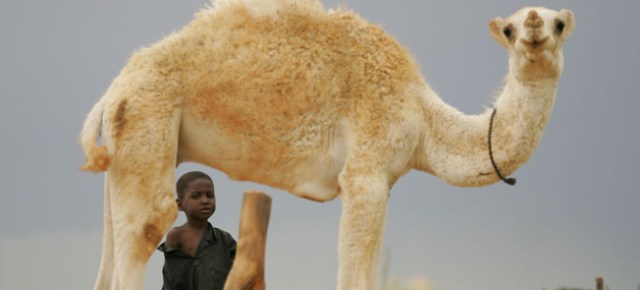
Expert opinion agrees that the best way to tap into the potential of the drylands is to build on the foundation of their livestock economies rather than ignoring them or seeking to replace them.

Making smallholder production more competitive is a powerful tool to reduce poverty, raise nutrition levels and improve the livelihoods of rural people in many developing countries
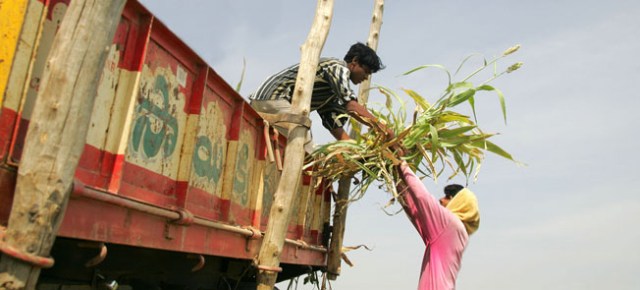
Mixed crop-and-livestock farms will, more than the traditional breadbaskets and rice bowls of the past, feed the developing world over the next few decades
Last month, the Climate Change Communication and Social Learning (CCSL) project organized an evidence-gathering workshop to better unpack what social learning is, and particularly how to assess and monitor it. Four monitoring and evaluation (M&E) specialists comment on some of the issues raised. Continue reading
Liya Dejene reflects on a one-day workshop for communicators organized by Farming First and the International Food Policy Research Institute (IFPRI) prior to IFPRI’s 2020 conference on “Building Resilience for Food and Nutrition Security” in Addis Ababa, Ethiopia. Continue reading
There has been much talk about social learning in CGIAR over the past decade. In recent years we have seen additional actions driven by the CCSL initiative; it has now produced a climate change communication and social learning framework and toolkit to help social learning beginners and experts do, document and assess social learning. Continue reading
ILRI has been using wikis since at least 2009 and they have been used extensively in projects such as the Nile Basin Development Challenge, Africa RISING, and the Livestock and Fish research program. Continue reading
The International Livestock Research Institute (ILRI) recently held a three-day training for communication staff working with the Tanzania Dairy Development Forum. Continue reading
The International Livestock Research Institute (ILRI) and the CGIAR Research Program on Water, Lands and Ecosystems (WLE) recently hosted a training workshop on blogging for scientists and science communicators in Nairobi. Continue reading
On 10-11 March 2014, Tezira Lore shared some examples of ways that ILRI has integrated social media in its communication strategy towards enhancing the discoverability of research outputs. Continue reading
In January this year, Peter Ballantyne and Michael Victor participated in an Agrilinks interview. They were asked to reflect on ways KM and communications contribute to our institutions, and particularly any ideas around scaling up. Continue reading
In May 2013, the International Livestock Research Institute (ILRI) convened a ‘writeshop’ on innovation platforms in Nairobi. Twenty individuals worked together, with expert facilitation and artistic support to produce 12 ‘practice briefs’. A contribution to the CGIAR Humidtropics research program, the briefs draw on experiences of the CGIAR Challenge Program on Water and Food, several CGIAR centers and partner organizations. Continue reading
Monitoring and evaluation (M&E) often feels as a burden that to be complied with. It is often equated with bean-counting and providing meaningless reports. Yet M&E also offers the promise of great learning – if done well. It can be a real instrument for smart adaptive management to deal with complex organizational agendas. How do … Continue reading
 Maarifa - Communications and Knowledge Management