Why animals matter to human health and nutrition
Human, livestock and environmental health are inextricably linked, Sixty-one per cent of all diseases are ‘zoonotic’ –that is, transmissible between animals and humans.
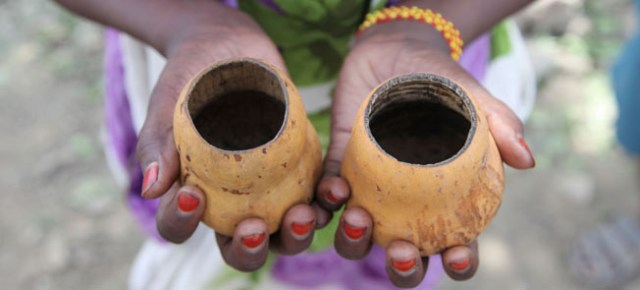
Human, livestock and environmental health are inextricably linked, Sixty-one per cent of all diseases are ‘zoonotic’ –that is, transmissible between animals and humans.
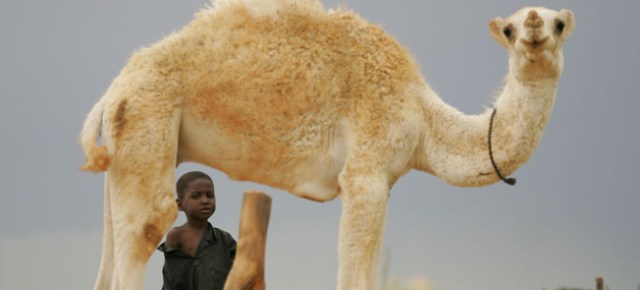
Expert opinion agrees that the best way to tap into the potential of the drylands is to build on the foundation of their livestock economies rather than ignoring them or seeking to replace them.

Making smallholder production more competitive is a powerful tool to reduce poverty, raise nutrition levels and improve the livelihoods of rural people in many developing countries
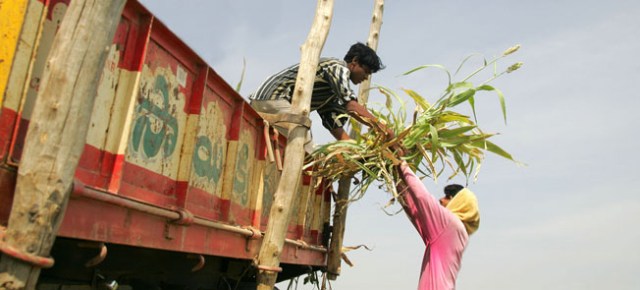
Mixed crop-and-livestock farms will, more than the traditional breadbaskets and rice bowls of the past, feed the developing world over the next few decades
In this video, Bruce Scott, Director of Partnerships and Communications (P&C) at ILRI introduces the aims and objectives of the annual P&C retreat held in Addis Ababa in January 2011: Looking back on the past year, setting priorities for the coming year. The key issue was how we ensure that the outputs of ILRI research … Continue reading
Speaking at the January 2011 ILRI Partnerships and Communications (P&C) retreat, Ian Moore, Head of ICT at ILRI reflects on the past year. He points to improvements in connectivity and bandwidth at various ILRI locations, especially at the ILRI campus in Addis Ababa. Much progress has also been made in the use of ICTs to … Continue reading
Speaking at the January 2011 ILRI Partnerships and Communications (P&C) retreat, Susan MacMillan, Head of Public Awareness at ILRI reflects on the past year. She highlights that we moved from print to online; from normal media to social media, especially blogging. The big challenge for 2011: How are we going to continue, and take it … Continue reading
At its meeting last week, the Management Committee of the International Livestock Research Institute (ILRI) adopted a proposal for the institute to use an ‘open’ license for its published outputs. The aim is to encourage maximum uptake and re-use of ILRI’s research. Under this proposal, ILRI retains copyright over each output. It also explicitly encourages … Continue reading
Liya Dejene has joined Knowledge Management and Information Services as Web Communications Assistant starting December 3, 2010. Liya has BSc in Information Systems from Addis Ababa University in 2007. Continue reading
From 1-3 December 2010, we held a Dspace training workshop at the ILRI campus in Nairobi. We brought together a group of interested people from ILRI, ICRAF, ICT-KM, CPWF, KARI and FAO – to gain skills and forge collaboration among us. An expert trainer was provided by @MIRE – a Belgian group specializing in in … Continue reading
Looking for some editorial assistance? We have set up an ILRI pool of editorial and other communication experts from around the world. The list has sections for English-language editors/proofreaders, scientific journalists, design and layout experts, film and multimedia experts, full-service communication experts and translators. Of course, you can also call on ILRI’s own editorial, graphics, … Continue reading
Last week, ILRI staff had a major input into the ‘5th All Africa conference on animal agriculture’ organized by the Ethiopian Society of Animal Production (ESAP) and the All Africa Society of Animal Production. Staff from ILRI KMIS in Addis were asked to help support the collation and documentation of the meeting. This means you … Continue reading
ArcGIS License Information: The CGIAR has recently signed a new contract with ESRI for ArcGIS software provision. The new contract means that we pay a fixed total cost and can request unlimited network and standalone licenses. However, we must monitor and register all these with ESRI and our main contact at ILRI is Wachira Theuri … Continue reading
Africa Science News Service is now accessible to ILRI staff. It provides “reliable and authoritative information about science and technology from Africa by Africa based reporters with an African eye.” Visit: http://africasciencenews.org Get login details from the Infocentres in Addis or Nairobi. Continue reading
 Maarifa - Communications and Knowledge Management