Why animals matter to human health and nutrition
Human, livestock and environmental health are inextricably linked, Sixty-one per cent of all diseases are ‘zoonotic’ –that is, transmissible between animals and humans.
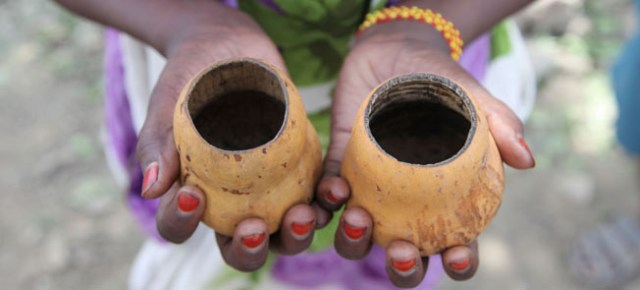
Human, livestock and environmental health are inextricably linked, Sixty-one per cent of all diseases are ‘zoonotic’ –that is, transmissible between animals and humans.
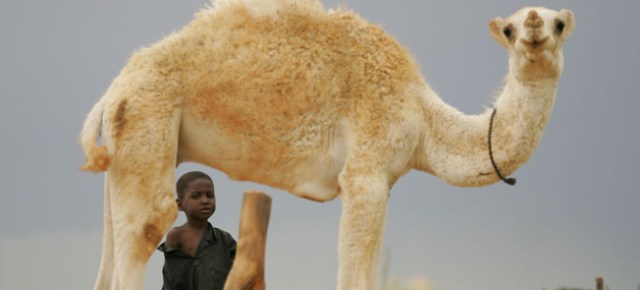
Expert opinion agrees that the best way to tap into the potential of the drylands is to build on the foundation of their livestock economies rather than ignoring them or seeking to replace them.

Making smallholder production more competitive is a powerful tool to reduce poverty, raise nutrition levels and improve the livelihoods of rural people in many developing countries
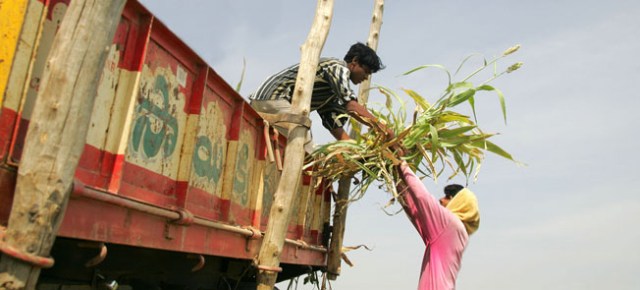
Mixed crop-and-livestock farms will, more than the traditional breadbaskets and rice bowls of the past, feed the developing world over the next few decades
ILRI scientist Alan Duncan was recently interviewed by the USAID Feed the Future/Agrilinks web site on ways he communicates research. He talks about how, since joining ILRI, he is working with ILRI’s Knowledge Management and Information Services to communicate beyond articles – writing blogs, putting more provisional research outputs (and processes) into the public domain, … Continue reading
We all work with information and knowledge and we communicate continuously. We generate lots of knowledge and valuable ideas; we meet partners and colleagues in events; and most of the time we need to organize, find and track our and others’ knowledge and information. Communicating and sharing information and knowledge have been a great challenge … Continue reading
The imGoats project aims to increase incomes and food security in a sustainable manner by enhancing pro-poor small ruminant value chains in India and Mozambique. It is running until December 2012 and five months before its end, project members recently examined what the project can contribute in terms of useful lessons and outputs of different sorts … Continue reading
Knowledge Management for Development (KM4Dev) is an established community of practice (CoP) that seeks to forge linkages and encourage peer learning and exploration around the field of knowledge management for development. The network has grown a lot over the past five years and now has just under 1500 mailing list subscribers and over 2700 Ning … Continue reading
The CGIAR world is currently in a whirlwind of workshops coinciding with the launch of various large research programs or of specific sub-sets of activities under these programs. From 12-14 June, 2012, the Tribe Hotel in Nairobi hosted one such workshop dedicated to the specific activities of the ‘Rainfed systems‘ strategic research program (SRP) and ecosystems … Continue reading
In its RIO+20 Call-to-action, CGIAR called for knowledge sharing systems that engage with smallholder farmers to improve the management of their crops, livestock and natural resources in order to increase production as well as minimize negative environmental impacts. Four CGIAR knowledge management specialists share their experiences on AlertNet: Peter Ballantyne (International Livestock Research Institute – … Continue reading
Angela, as she prefers, is the new Knowledge Sharing and Communications Officer based at ILRI Nairobi campus. A communication and public relations graduate of Moi University, with journalism and environmental communications background, she is determined to help KMIS realize its vision. Before joining ILRI, she worked as a project/communications officer at Seeds of Peace Africa … Continue reading
This week in Addis Ababa, the The USAID-funded TOPS Program held a Food Security and Nutrition (FSN) Network Regional Knowledge Sharing Meeting to bring together food security and nutrition grantees, donors, and researchers for peer learning, knowledge sharing, and networking (see event program and details). On the afternoon of the first day, Peter Ballantyne (Head … Continue reading
ILRI staff, other CGIAR centers and partner organizations involved in research for development all have to work with information, knowledge and communication. In fact they all do it, continuously. Research is indeed about information, knowledge and communication too, whether alone, in teams and in wider and increasingly complex partnerships. We can achieve smarter research through smarter … Continue reading
In 2010 the International Livestock Research Institute (ILRI) started making photofilms to capture event highlights and to tell stories about people who depend on livestock for their livelihoods, food, income and cropping. What are photofilms? A photofilm combines (mostly still) photographs and audio recordings in a multimedia product, usually just a few minutes in length. … Continue reading
 Maarifa - Communications and Knowledge Management